

We've often heard the theory that the right hand saw can turn a good woodworking project into a masterpiece, but is there truth to this claim?
In our quest for precision in wood cutting, we've explored various saws – from Japanese Pull Saws known for their fine cuts to the robust Western Back Saws and the intricate Dovetail Saws. Each type offers unique benefits, whether you're working on detailed coping or maneuvering tight spaces with a Keyhole Saw.
As we discuss the top contenders, we'll uncover which saws truly make the cut for achieving that flawless finish, inviting you to ponder how the right tool could elevate your own woodworking projects.
Key Takeaways
- Japanese pull saws are ideal for fine, intricate cuts with their thin, flexible blades.
- Western back saws and dovetail saws offer unparalleled precision for hardwood and joinery tasks.
- Coping and veneer saws excel in detailed and highly accurate cuts in thin wood layers.
- Choosing saws with high TPI blades and ergonomic handles enhances cutting precision and user comfort.
Japanese Pull Saws
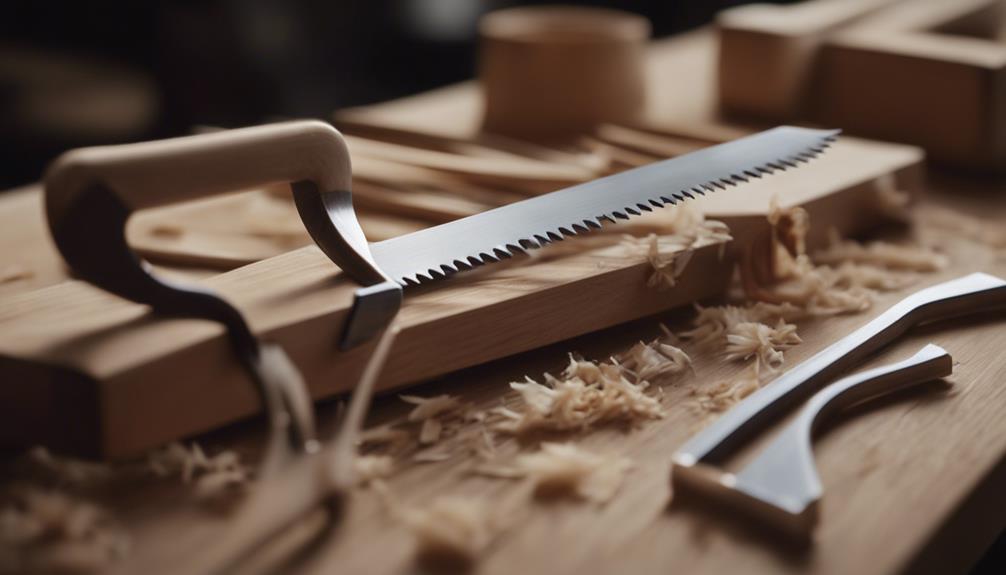
Japanese pull saws, known for their precision and efficiency, revolutionize how we cut wood. Unlike the push stroke typical of many Western saws, these tools cut on the pull stroke. This contrast might seem minor, but it's a game-changer for us. We've found that it requires less force, giving us greater control and accuracy. The result? Cleaner, straighter cuts every time, with much less effort.
The thin, flexible blades are another standout feature. They allow us to make fine, intricate cuts that would be challenging with a thicker blade. This is especially useful for joinery or when we're aiming for a precise fit. Plus, the blades are easily replaceable, which means we can quickly swap in a fresh one when it gets dull, keeping our work flowing smoothly.
We've also appreciated the variety available within the category of Japanese pull saws. From the dozuki with its back spine for extra stability to the kataba for deeper cuts and the ryoba, offering both rip and crosscutting teeth on a single blade, there's a specialized saw for nearly every type of cut we need to make. This specialization has boosted our efficiency and the quality of our work significantly.
Western Back Saws
While we've explored the advantages of Japanese pull saws, it's also worth examining Western back saws, known for their robust construction and precision in detailed woodworking tasks. These saws, with their stiffened spine and finer teeth, offer us remarkable control and accuracy, making them indispensable for intricate cuts. They're the backbone of our tool collection when it comes to creating challenging joinery and flawless finishes.
We've seen these saws transform challenging tasks into achievable artistry. Their reliability and efficiency in cutting through hardwoods with minimal tear-out is something we can't help but admire. It's this blend of durability and precision that makes Western back saws a favorite among us.
To share the impact these saws have had on our projects and emotions, we've compiled a table:
| Feature | Benefit | Emotional Impact |
|---|---|---|
| Stiff Spine | Straight Cuts | Confidence |
| Fine Teeth | Smooth Finish | Satisfaction |
| Robust Construction | Longevity | Trust |
| Precision | Detailed Work | Pride |
| Ergonomic Design | Comfort | Joy |
Each element of a Western back saw contributes to not just the functionality but also the joy and pride we take in our woodworking projects.
Dovetail Saw Essentials
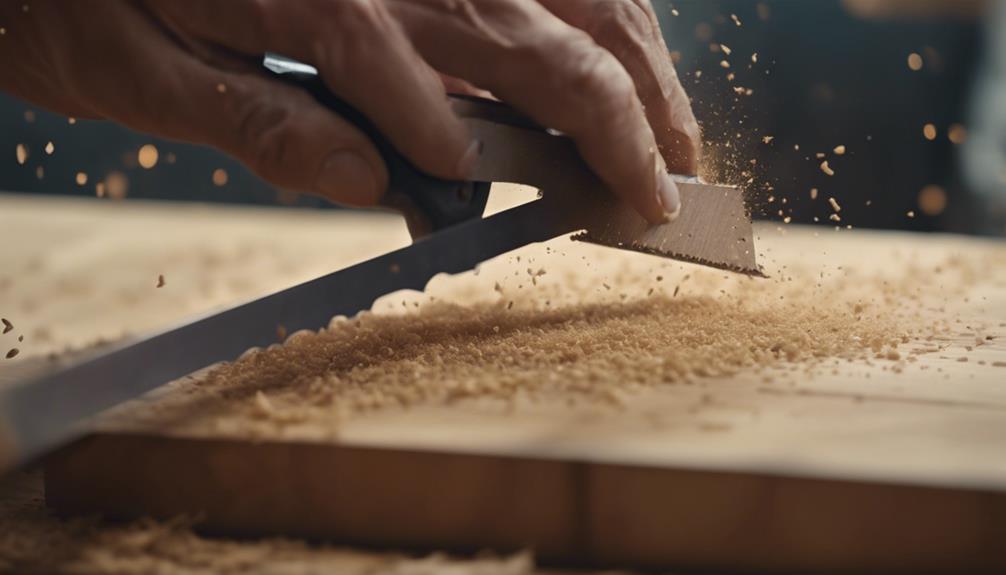
Diving into the specifics, let's explore the essentials of dovetail saws, a key tool for precision joinery in woodworking projects. These saws are specially designed for creating dovetail joints, an interlocking technique used for corners of drawers or boxes, ensuring a tight and aesthetically pleasing fit without the need for nails or screws.
Dovetail saws have a thin blade, fine teeth, and a straight handle, enabling us to make precise cuts with minimal effort. Their teeth are often set for a narrow kerf, providing us with the control needed for detailed work on hardwoods or softwoods alike. We'll find these saws in various sizes, but typically, they range from 8 to 10 inches in length, with 14 to 17 teeth per inch (TPI) being common. This configuration is ideal for the delicate work required in dovetail joints.
When we're choosing a dovetail saw, it's essential to look for one with a comfortable handle and a blade that's stiff enough to ensure straight cuts. A well-made dovetail saw becomes an extension of our hands, allowing us to execute intricate joinery with confidence. Whether we're seasoned woodworkers or novices, mastering the use of a dovetail saw opens up a world of craftsmanship possibilities.
Coping Saws for Detail
Switching gears, let's explore the world of coping saws, an indispensable tool for intricate and detailed wood cutting. When it comes to achieving precision in tight corners and complex patterns, we've found that coping saws stand out from the crowd. They're specifically designed for fine work that other saws simply can't handle.
Here's what sets them apart:
- Blade Flexibility: Coping saws feature thin blades that can be easily removed and inserted through a drilled hole in the wood. This allows us to make interior cutouts without an entry point from the edge.
- Adjustable Tension: We can adjust the blade tension easily, ensuring the best control and precision with each cut. This adaptability is important for intricate work where precision is key.
- Handle Ergonomics: The handles are designed for comfort, reducing fatigue during long, detailed projects. This means we can work longer and with greater accuracy.
- Wide Variety of Blades: There's a wide selection of blades available for coping saws, each suited for different materials and types of cuts. This versatility lets us tackle a broad range of projects with just one tool.
In our toolkit for detailed woodwork, coping saws are a must-have. Their unmatched precision and versatility make them ideal for detailed cuts that other saws can't achieve.
Veneer Saws for Accuracy
Turning our attention to veneer saws, we find they're essential for achieving unmatched accuracy in thin wood layers.
Crafting delicate veneers demands precision and finesse, and that's where veneer saws shine. They're specially designed with fine teeth and a short blade, making them perfect for cutting through thin layers of wood without splintering or tearing. We've discovered that their compact size allows for exceptional control, enabling us to make precise cuts that are straight and clean.
We prefer using veneer saws with offset handles as they provide improved visibility of the cutting line, making sure our cuts are exactly where we want them. The blade's short length also means we can maneuver it easily, even in tight spaces, without compromising on accuracy.
One point we always stress is the importance of keeping the blade sharp. A dull blade can ruin the delicate veneer, leading to wasted material and time. Regular maintenance ensures our saws are always ready to deliver precise cuts.
In our experience, investing in a high-quality veneer saw is a wise choice for anyone serious about woodworking. It's not just about making cuts; it's about making the right cuts with precision and care.
Keyhole Saws for Tight Spaces
When dealing with tight or awkward spaces, keyhole saws are our go-to tool for precise cuts. These specialized saws allow us to navigate those hard-to-reach areas with ease, making them indispensable in our toolkit. Their slim, pointed blade makes it simple to start a cut in the middle of a panel or near an edge without the need for a pilot hole.
To truly appreciate the versatility and utility of keyhole saws, consider the following aspects:
- Blade Type: There are two main types – fixed and retractable. Fixed blades offer stability, whereas retractable blades provide safety and convenience by allowing the blade to be hidden when not in use.
- Handle Ergonomics: A comfortable, non-slip grip is important for control and precision, especially in tight spaces where maneuverability is key.
- Tooth Configuration: Fine-toothed blades are perfect for clean cuts in wood, plaster, or drywall, while coarse teeth are better for faster, rougher cuts.
- Versatility: Beyond wood, many keyhole saws are capable of cutting through plastic and metal, provided you use the right blade.
We've found that a good keyhole saw becomes an extension of our hands, giving us the confidence to tackle intricate cutting tasks in confined spaces.
Frequently Asked Questions
How Do You Properly Maintain and Store Different Types of Hand Saws to Ensure Their Longevity?
We regularly clean our saws with soapy water and dry them thoroughly. We lubricate the blades to prevent rust and store them in a dry place, hanging or in a protective sheath for longevity.
Can Hand Saws Be Effectively Used on Materials Other Than Wood, Such as Plastic or Metal, and What Are the Considerations?
We've found that hand saws can cut materials beyond wood, like plastic or metal, but it's important to think about the saw's type and blade. Matching these aspects guarantees efficient and safe cutting for various projects.
What Safety Equipment and Precautions Are Recommended When Using Hand Saws for Wood Cutting?
We recommend wearing safety goggles, gloves, and hearing protection when using hand saws. It's also important to keep our work area clean and to always cut away from our bodies to prevent accidents.
How Does the Skill Level of the User Affect the Choice of Hand Saw, and What Are the Learning Curves Associated With Each Type?
We've noticed that a user's skill level greatly influences their hand saw choice, as each type has its own learning curve. Beginners might start with simpler models, while experienced users can handle more complex ones.
Are There Eco-Friendly Options or Practices for Disposing of or Recycling Old and Worn-Out Hand Saws?
We've been wondering if there are environmentally friendly ways to get rid of our old hand saws. Turns out, recycling or upcycling them into new tools or art projects are great options to explore.


