

As we stand on the bridge between the rich heritage of traditional joinery and the fast-paced world of modern techniques, it's clear that woodworking has undergone a significant transformation. We've seen everything from the enduring dovetail to the precision of CNC machinery reshape what we thought was possible.
Yet, as we explore these changes, a question lingers in the air like sawdust in a workshop: have these innovations enhanced the craft, or have they steered us away from the essence of woodworking?
Join us as we examine this intriguing intersection, where the past and present meet to shape the future of joinery.
Key Takeaways
- Traditional joinery techniques like dovetail and mortise and tenon joints prioritize strength and craftsmanship.
- Modern joinery introduces CNC technology and sustainable adhesives for efficiency and eco-friendliness.
- The integration of new materials and methods in modern joinery offers more flexibility in design.
- The craftsmanship debate centers on balancing tradition's quality with modern methods' accessibility and innovation.
Overview of Joinery Methods
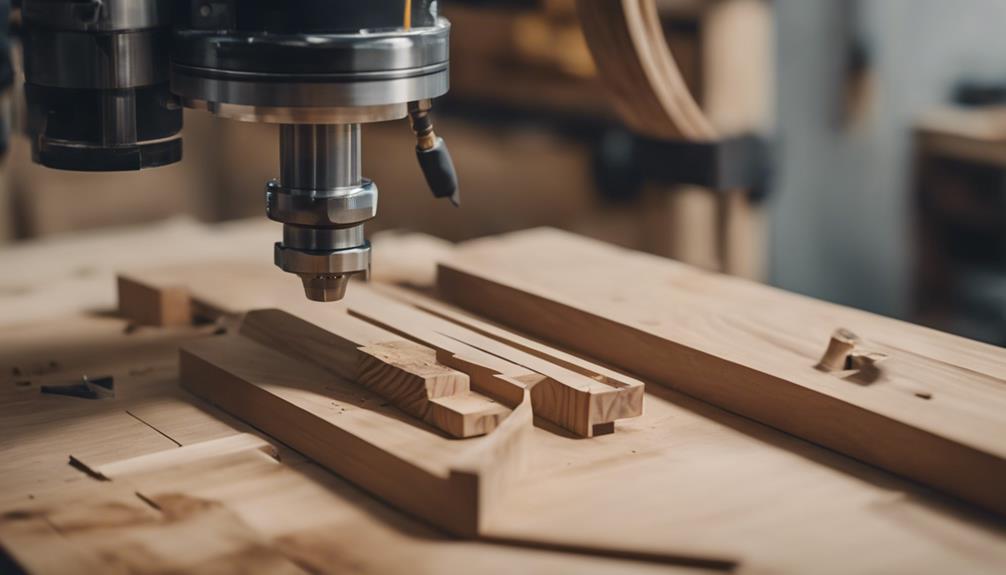
Several joinery methods exist in woodworking, each offering unique advantages and challenges. We've observed that the choice of technique often depends on the project's requirements, the desired aesthetic, and the woodworker's skill level.
For instance, dovetail joints are renowned for their strength and beauty, making them ideal for drawers and boxes where durability and appearance are paramount. On the other hand, mortise and tenon joinery, one of the oldest methods, provides an incredibly strong connection ideal for furniture and structural frames.
We also can't overlook the simplicity and efficiency of dowel joints, which are perfect for beginners yet strong enough for more advanced projects. Meanwhile, biscuit joinery, though less visible, offers an excellent method for aligning and joining pieces, especially in cabinetry and shelving.
Each of these methods has its place in woodworking, and we find that mixing and matching techniques based on the project's needs leads to the best outcomes. Understanding the strengths and limitations of each joinery method allows us to choose the most appropriate for our work, ensuring durability, functionality, and beauty in our creations.
Historical Joinery Techniques
Throughout history, woodworkers have developed a myriad of joinery techniques to construct durable and aesthetically pleasing items, adapting these methods to suit the tools and materials available to them. We've seen the evolution of these techniques from simple joints to more complex and intricate designs that not only serve functional purposes but also add to the item's overall beauty.
Mortise and tenon joints, for instance, have been a cornerstone in woodworking for centuries. They've provided a robust way to join pieces of wood at a 90-degree angle, showcasing the craftsmanship and skill of the woodworker. Similarly, dovetail joints, revered for their resistance to being pulled apart, illustrate the precision and care that went into historical furniture making, making them a hallmark of quality workmanship.
We've also seen the use of lap joints, which, although simpler, were no less effective for certain applications. They allowed for quick and efficient joining of wood pieces, reflecting the practical needs of the time.
In reflecting on these historical techniques, it's clear that they weren't just about joining wood; they were about creating lasting works of art that stood the test of time. These methods, rooted in tradition and skill, set the foundation for the woodworking practices we see today.
Contemporary Joinery Innovations
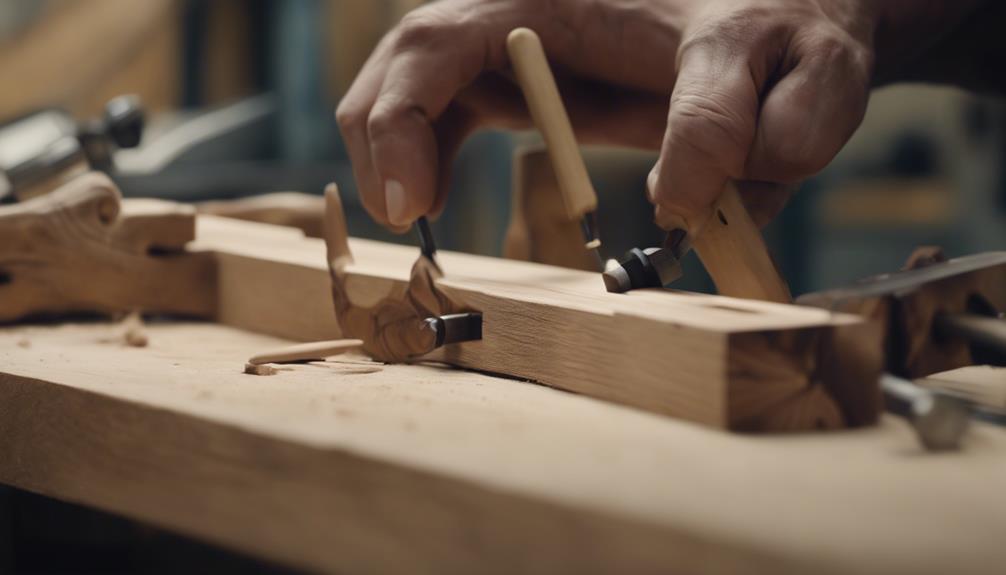
Building on the rich heritage of traditional techniques, today's woodworkers are pioneering innovative joinery methods that push the boundaries of design and functionality. We're witnessing a renaissance in woodworking where the blend of old and new creates stunning, durable pieces. Advances in technology, like CNC routers and laser cutters, allow for precision and intricacy previously unimaginable, enabling us to experiment with complex interlocking joints that add both strength and aesthetic value.
We're also seeing a surge in the use of sustainable, non-toxic adhesives that complement these modern joinery methods, further enhancing their durability and environmental friendliness. Additionally, the integration of metal with wood in hybrid joints is breaking new ground, offering structural benefits and opening up fresh design possibilities.
In addition, the digital world has revolutionized how we share and innovate in woodworking. Online platforms enable us to exchange ideas and techniques at an unprecedented rate, fostering a global community of creative minds that drive the evolution of joinery.
Through these contemporary innovations, we're not just crafting furniture or art; we're setting new standards for what's possible in woodworking, ensuring the craft not only survives but thrives in the modern era.
Dovetail Joints: Then and Now
Dovetail joints, a hallmark of craftsmanship and durability, have evolved extensively from their traditional roots to modern adaptations. Initially, they were meticulously crafted by hand, requiring precise skill and patience. This method, while time-consuming, resulted in connections of exceptional strength and aesthetic appeal, making dovetail joints a favorite in fine furniture making and cabinetry.
In the past, woodworkers relied on simple tools like saws, chisels, and mallets to create these intricate joints. The process demanded a deep understanding of the wood's properties and a steady hand. Each joint bespoke the artisan's skill, with variations in size and angle reflecting the intended use and the maker's signature style.
Today, we've embraced technological advancements that streamline the creation of dovetail joints. Power tools and CNC routers can produce precise cuts in a fraction of the time it once took. While some purists argue that this diminishes the craftsmanship, we believe it opens up the technique to more creators. Modern adaptations haven't replaced the traditional methods but rather expanded the possibilities, allowing both seasoned woodworkers and hobbyists to explore and appreciate the beauty and functionality of dovetail joints in new ways.
Mortise and Tenon Evolution
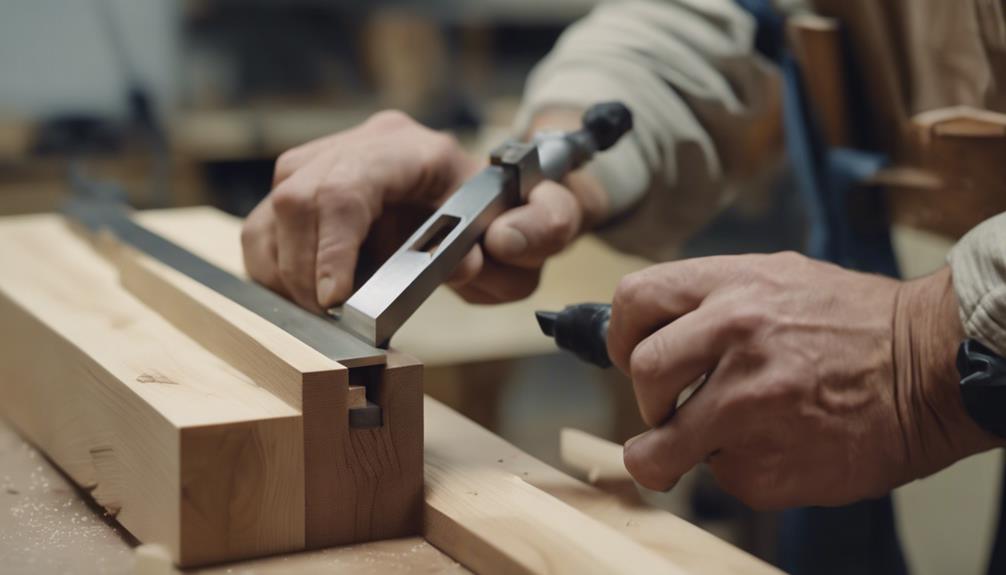
Just as dovetail joints have seen notable evolution, the mortise and tenon technique has also undergone remarkable transformations, adapting to new technologies and materials. Historically, this joinery method involved painstakingly cutting a tenon to fit snugly into a mortise by hand. It's a proof to the skill and precision of ancient woodworkers that many of these joints have stood the test of time, found in artifacts that date back thousands of years.
In modern workshops, we've embraced advancements that allow for more precise and efficient creation of these joints. Computer Numerical Control (CNC) machines, for instance, can carve out both components of the joint with unparalleled accuracy, reducing the margin for error and speeding up production. We've also seen innovations in the types of materials used alongside wood, such as metal tenon inserts that provide additional strength and durability to the joint.
Moreover, the design of mortise and tenon joints has evolved. We now see variations like the floating tenon, where both the piece of furniture and the tenon are created separately and then joined, offering greater flexibility in design and application. These adaptations highlight our ongoing quest to enhance the strength, aesthetic appeal, and functionality of our woodworking projects.
Adhesives in Modern Woodworking
In modern woodworking, we've increasingly turned to advanced adhesives to enhance joint strength and durability. This shift isn't just about convenience; it's about leveraging the chemistry of these substances to create bonds that traditional methods can't match. We've moved beyond simple white glues to a sophisticated array of products that each serve different needs within the craft.
- Polyvinyl Acetate (PVA): The classic wood glue, known for its ease of use and strong bond. It's our go-to for most projects.
- Epoxy Resins: When we need something waterproof or extra sturdy, epoxy is our hero. It fills gaps and can bond dissimilar materials.
- Cyanoacrylate (CA): Super glue for woodworkers. We use it for quick fixes or when working with small, delicate pieces that need to hold fast immediately.
- Polyurethane Glue: It's great for outdoor projects because it's waterproof and flexible. Plus, it expands as it cures, filling in any pesky gaps.
These adhesives have become indispensable in our workshop. They allow us to achieve a level of precision and durability that traditional joinery methods alone can't provide. It's not just about sticking pieces together; it's about creating something that lasts.
CNC Machinery and Joinery
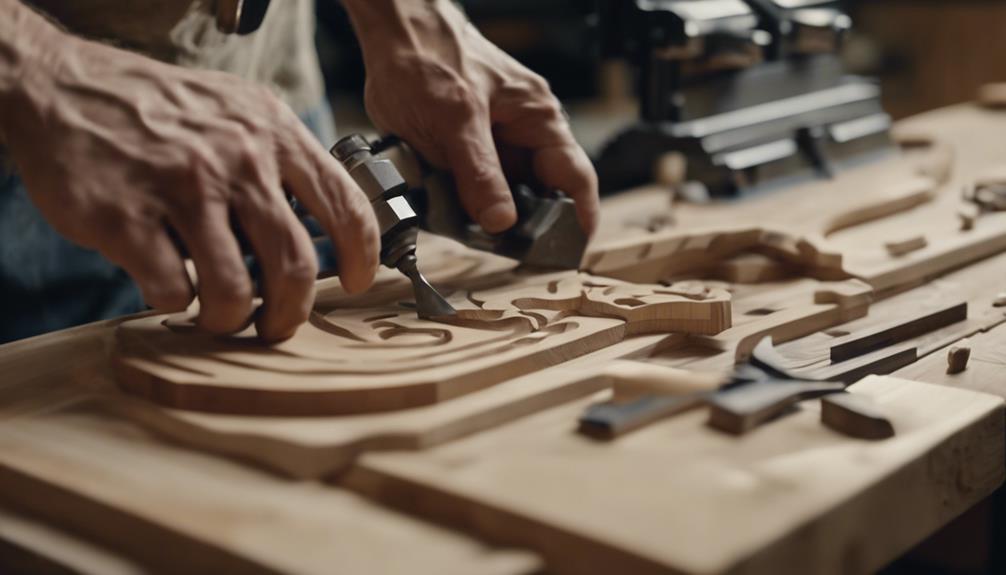
While adhesives offer a strong bond for woodworking projects, CNC machinery elevates the precision and efficiency of joinery techniques to new heights. We've seen firsthand how Computer Numerical Control (CNC) technology transforms the woodworking landscape, allowing for intricate designs and precise cuts that were once thought impossible to achieve manually.
CNC machinery works by translating design inputs from computer software into physical movements, making sure each cut is exact and repeatable. This level of accuracy is particularly beneficial for joinery, where the fit between two pieces of wood must be precise to guarantee strength and durability. We're able to produce complex joints, such as dovetails or finger joints, with a consistency and speed that traditional methods can't match.
Additionally, CNC technology opens up possibilities for customization and scalability in our projects. Whether we're crafting a single piece of bespoke furniture or a large batch of identical components, CNC machines allow us to maintain the same high standard of quality across all our work.
In embracing CNC machinery, we're not just enhancing our capability to produce better joints; we're also future-proofing our craft, making sure that we can meet the demands of modern designs while maintaining the integrity and beauty of traditional woodworking.
The Craftsmanship Debate
Frequently, we find ourselves at the heart of a debate that questions whether modern joinery techniques compromise the authenticity of craftsmanship. It's a passionate discussion, with strong opinions on both sides. We're here to peel back the layers of this debate and examine what's really at stake.
- Tradition vs. Innovation: There's a belief that traditional methods, honed over centuries, inherently carry more value and authenticity than modern techniques. This perspective champions the meticulous hand skills that have been passed down through generations.
- Quality and Durability: Another point of contention is the quality and durability of work produced. Critics of modern methods argue that machines can't replicate the nuanced touch of a skilled craftsman.
- Accessibility and Efficiency: On the flip side, modern techniques make woodworking more accessible to beginners and increase efficiency. This democratization of craft means that more people can participate in woodworking than ever before.
- Sustainability Concerns: In conclusion, there's a growing concern about the sustainability of materials and processes. Traditional methods are often seen as more environmentally friendly, although modern advancements are quickly closing this gap.
The debate isn't just about techniques; it's about values, priorities, and perspectives on what constitutes true craftsmanship in woodworking today.
Frequently Asked Questions
How Do Environmental Factors Influence the Choice Between Traditional and Modern Joinery Techniques?
We're considering how environmental factors impact our joinery technique choices. We've found that humidity, temperature, and sustainability concerns often dictate whether we opt for older methods or embrace newer, possibly more eco-friendly, technologies.
What Is the Learning Curve Like for Beginners Transitioning From Traditional to Modern Joinery Methods?
We've found switching from traditional to modern joinery methods challenging yet rewarding. It's a steep learning curve at first, but with practice, we're mastering new techniques faster. It's all about adapting and embracing change.
Can Traditional Joinery Methods Be Effectively Combined With Modern Adhesives or Finishes to Enhance Durability Without Compromising Authenticity?
We've found that combining traditional joinery with modern adhesives or finishes can indeed boost durability without losing authenticity. It's a great way to honor old techniques while taking advantage of contemporary materials' benefits.
How Do Traditional and Modern Joinery Techniques Impact the Carbon Footprint of a Woodworking Project?
We're exploring how different joinery techniques affect a project's carbon footprint. It's fascinating to see the environmental impact of our choices, pushing us to contemplate more sustainable practices in our woodworking endeavors.
What Are the Ethical Considerations in Choosing Between Traditional Handcrafted Methods and Automated, Cnc-Based Joinery in Terms of Supporting Local Craftsmanship and Economies?
We're weighing the ethics of supporting local artisans versus using CNC machines. It's about balancing economic support for communities with efficiency. Choosing handcrafting can boost local economies, but automation offers undeniable speed and precision advantages.


